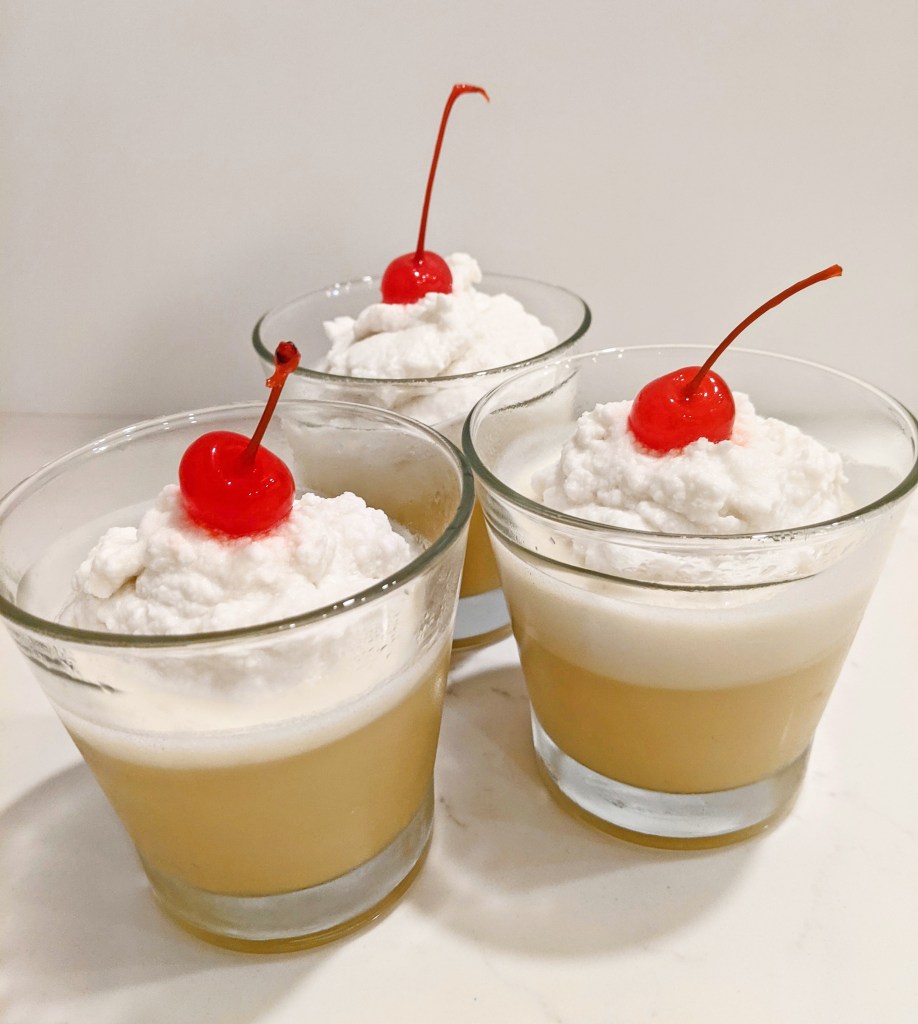
Golden Parfait
½ cup sugar
½ cup water
2 eggs yolks
1 teaspoon gelatin
2 tablespoons cold water, additional
Few grains salt
1 cup dairy-free heavy cream alternative, whipped
1 ½ teaspoons vanilla
1. Boil sugar and water to thread stage, or 230 degrees Fahrenheit. (Note: if you are not familiar with the sugar stages, you may want to keep a diagram of the stages near the stove.)
2. Pour sugar mixture slowly over beaten egg yolks, beating while pouring.
3. Soften gelatin in cold water, add to first mixture with salt, and stir until gelatin is dissolved, then cool and chill in refrigerator tray.
4. Whip* dairy-free whipping cream, being careful not to overwhip, which will cause the cream alternative to separate. *You will not be able to achieve voluminous peaks with a dairy-free cream alternative.
5. Ensure that refrigerated mixture is cool, and fold in whipped cream and flavoring.
6. Place in freezer until set, before moving to the refrigerator.
7. Serve in tall parfait glasses, garnishing with whipped cream and topping with a maraschino cherry. Serves 3-6.
**Regarding cooking safety: Hot sugar water looks deceptively like water but retains heat much more effectively. It is very easy to burn yourself and others with splatters and drips. Be especially careful when children are in the kitchen.**
Original Recipe
Rumford Complete Cook Book, 1943
½ cup sugar
½ cup water
2 eggs yolks
1 teaspoon gelatine
2 tablespoons cold water, additional
Few grains salt
1 cup heavy cream, whipped
1 ½ teaspoons vanilla
Boil sugar and water to thread stage (230 degrees F.) then pour slowly over beaten egg yolks, beating while pouring. Soften gelatine in cold water, add to first mixture with salt, and stir until gelatine is dissolved, then cool and chill in refrigerator tray. Fold in whipped cream and flavoring; return to refrigerator tray and complete freezing; or turn into a mold, cover, seal and bury in equal parts of ice and salt for four hours. Serve in tall parfait glasses, garnishing with whipped cream and topping with a maraschino cherry. Serves 6.
Comments: What a light, silky smooth custard. Man, they ate well in the 1940s! This would be a delightful end to a robust winter meal or a light summer dinner. It requires just a few ingredients and an intermediate knowledge of cooking science and the sugar stages used in candy making.
Boiling sugar water is one way to transform it from a liquid to a solid, from one state of matter to another. Think back to the hours spent in chemistry lab; just like many of those experiments requiring a Bunsen burner, the sugar water doesn’t transform immediately, and it’s difficult to know exactly when it has. Once it begins to solidify, it can quickly move from thread to soft ball and beyond without any major visual change until the heat is removed. My solution to this problem is to periodically remove it from the heat, as it is nearly impossible to estimate the sugar water’s consistency in a rolling boil. You’ll also want to keep a spoon nearby for thread-checking. Once you see threads hanging from the spoon, remove it from the burner immediately.
I also wanted to share a few comments about dairy-free alternatives, because I find that they can be difficult to use. For this recipe, it is imperative that the whipped cream be added to a fully-cooled custard. I’ve added a note about the addition of the whipping cream in the modified recipe to stress the importance of this step. If the custard is not fully cooled, the whipped cream will dissolve into the custard, only to separate from the custard during the settling process. This can disastrous if you are using a dairy-free whipping cream, as it can create a grainy, bland white top layer that is truly unpleasant. Not to worry, though! If this happens to you, simply remove it will a spoon before serving and cover the disturbed top with extra whipped cream and a festive cherry. With an understanding of the limitations of each dairy-free product, it’s possible to create a dessert that is very similar to the original.
Lastly, regarding serving size, I divided this recipe into three portions, half of what was suggested in the original recipe. You may want to consider doubling the recipe or you may risk having some disappointed guests!
 Don't Break the Mold