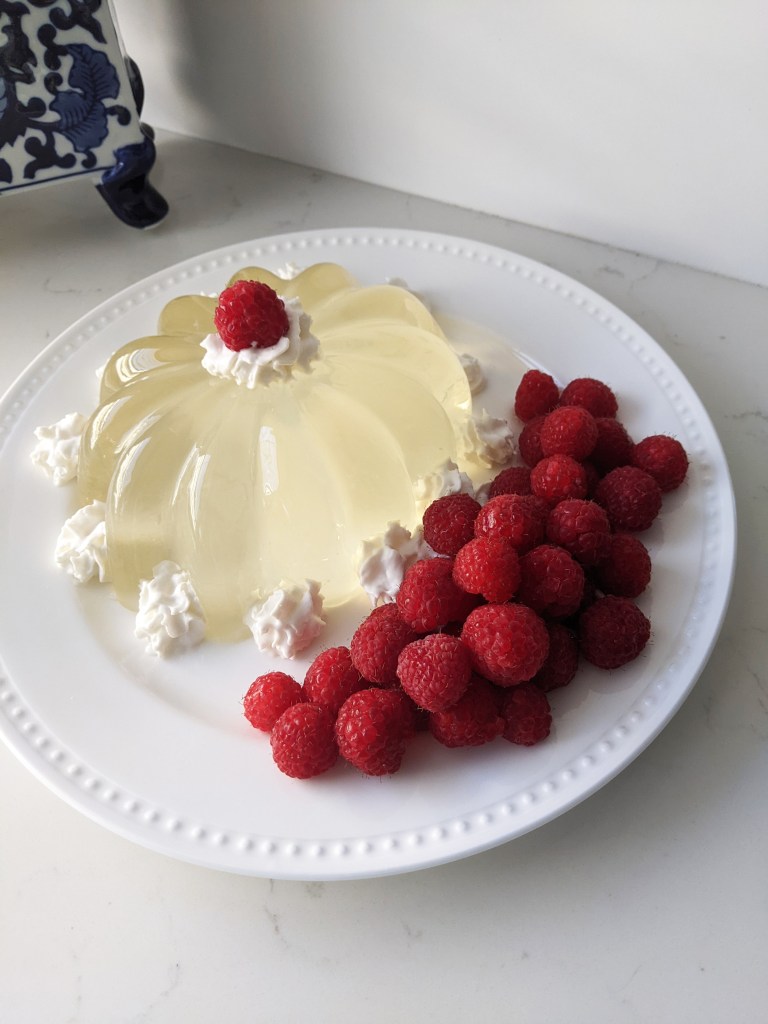
Wine Jelly, No. 2
One package + one teaspoon unsweetened gelatin
Cold water
1 pint hot water
½ – 1 cup sugar
½ cup wine
1 tablespoon or more lemon juice
Non-dairy whipped cream and fruit for garnish
1. Dissolve gelatin in a little cold water and add pint of hot water.
2. Let gelatin and water come to a boil and add wine, lemon juice.
3. Add sugar to taste and refrigerate until set.
4. Unmold and garnish with whipped cream and fruit.
Original Recipe
from Hood’s Cook Book, c. 1880
To one paper Cox’s Gelatine add one pint of cold water, the juice and grated rind of two lemons, one pounded nutmeg and two or three sticks of cinnamon. Allow this to stand one hour, then add one quart of boiling water, one pint of wine—Sherry is much the best—one wineglass of brandy, two pounds of white sugar. When all is dissolved strain through a flannel jelly bag.
Wine Jelly, No. 2
from Hood’s Cook Book, c. 1880
One-third of a package of gelatine dissolved in a little cold water; to this add a pint of hot water and let it come to a boil; then put in two cups of sugar, one half-cup of wine or boiled cider, and nearly one tablespoon or essence of lemon. Let cool till the next day.
Comments: Happy New Year’s Eve! We began our celebration last night with this festive and sophisticated dessert from the 1880s. It’s a light and fun end to a heavy winter meal.
After reviewing a number of wine jelly recipes, I decided to try this one for several reasons: it uses the least amount of wine, it is the simplest, and, most importantly, it is the oldest.
The lack of details made me curious about the type of wine, which I assumed should be a dry red based on the provided sugar to wine ratio. I was wrong! A search for confirmation through a comparison of similar recipes revealed no consistencies. In all the recipes I reviewed, the type of wine was either unspecified or a preference for sweet dessert wine like sherry or port was given. Based on this research, I chose to use the uncorked Moscato d’Asti in our refrigerator.
This dessert requires some tasting throughout the process. Be careful to add the sugar in small amounts, sampling as you go, and only after you add your wine and lemon juice. It is also worth considering the wine and water ratio that you would find most enjoyable, as you may want adjust it prior to addition of the sugar and juice. I used a 1/2 cup of sugar, 1/2 cup of sweet wine, and a tablespoon of lemon juice with some success. My tasters and I found this combination created a very delicate taste, with sugar as the predominate flavor, the wine an aftertaste, and the lemon juice indiscernible.
When garnishing this beauty, you may want to consider including a substantial amount of berries and whipped cream. I had a “happy accident” while plating the gelatin, which landed left of the plate’s center. To compensate, I piled much of the fruit to one side, adding more raspberries than I had originally thought to include. This addition was popular with my tasters, who enjoyed the raspberries both with and without the gelatin.
 Don't Break the Mold
2 thoughts on “Wine Jelly, No. 2”