2/3 cups cold water
1 envelope unflavored gelatin
Juice from a small orange
Grated orange peel
1 ½ tablespoons lemon juice
1 ¼ cups sugar
1/3 cup confectioner’s sugar
1 tablespoon cornstarch
1. Soak the gelatin in one-third cup cold water five minutes.
2. Combine sugar and one-third cup cold water in a large pot and heat until boiling.
3. Add the gelatin and boil slowly but steadily twenty minutes until the mixture begins to form consistent threads. You may need to remove the sugar-gelatin mixture from the burner from time to time in order to control the boiling sugar.
4. Remove mixture from heat and add the orange rind and fruit juice, a total of about one-quarter cup of fruit juice.
5. Pour in the mixture into a straight-sided container to the depth of one inch. 6. When firmly set immerse mold in warm water; turn out and cut in cubes and roll in confectioner’s sugar and cornstarch.
Note: Recipe can be varied by using different fruit juices, flavorings, and food coloring.
Original Recipe
Charles B. Knox Gelatine Co.’s Dainty Desserts for Dainty People, c. 1920
2 envelopes Knox Sparkling Gelatine.
1 large, juicy orange.
1 lemon.
1 lb. granulated sugar.
Soak the gelatine in two-thirds cup cold water five minutes. Put sugar on stove in two-thirds cup cold water, and when it comes to boiling point add the gelatine. Boil slowly but steadily twenty minutes; add the grated rind and juice of the orange and the juice of the lemon (there should be one-half large cup of fruit juice). Wet tin with cold water and pour in the mixture to the depth of one inch. When firmly set immerse mold in warm water; turn out and cut in cubes and roll in confectioner’s sugar to which has been added a teaspoonful of cornstarch. Vary by using different fruit juices, flavorings, and colorings.
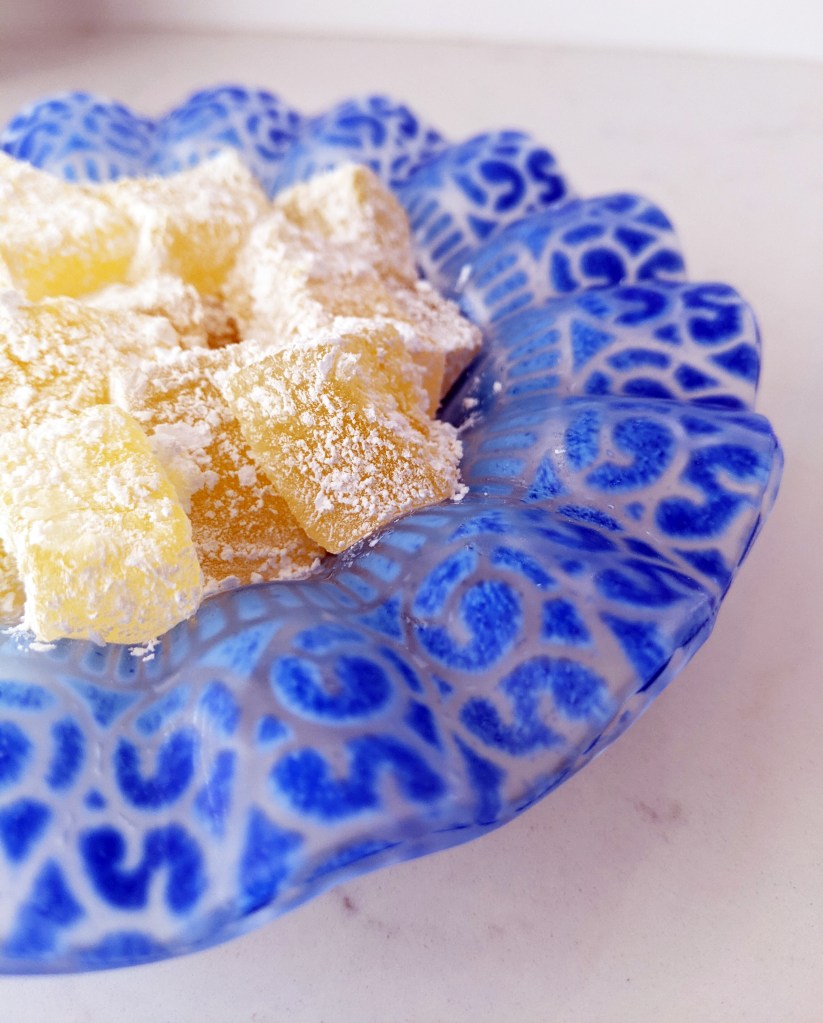
Comments: This delicious Turkish delight or lokum requires a familiarity with candy-making, but it is not impossible for beginners to master.
While this recipe could be considered a variation of the traditional orange bergamot flavor, it deviates from other methods in two critical ways. Instead of gelatin, traditional recipes call for cream of tartar and cornstarch, which are added only after the sugar reaches the soft ball stage, not prior to it. With these changes, the gelatin-based Turkish delight is a little softer but still very similar to – if not better than – the Turkish delight available in stores.
Beginner cooks can be confused by the different stages of cooking sugar. I recommend that those feeling less than confident look at this website and spend a few minutes on Google. Confidence is key, as is a sense of caution. You can always continue to cook the sugar, but you cannot reverse the solidification process!
In the past, I’ve enjoyed Turkish delight flavored with rosewater and pistachios, but this flavor is equally enjoyable. Try serving this elegant dessert in a vintage or crystal candy dish with your afternoon coffee or tea. It is a special treat your guests will remember.
 Don't Break the Mold