Coconut Maple Cream

Coconut Maple Cream 
1 envelope unflavored gelatin
1 ¼ cups + 1 tablespoon maple syrup
1 cup coconut cream
¾ cup almond milk
1 egg yolk
1/4 teaspoon vanilla
Pinch of salt
Dairy-free whipped cream, walnuts, and maple syrup for garnish

1. Soak gelatin in half cup almond milk for ten minutes.
2. Heat remaining almond milk, egg yolk, coconut cream, and maple syrup, stirring continuously until mixture thickens.
3. Add gelatin, salt, and vanilla.
4. When almost congealed, whip until frothy and turn into greased mold.
5. Let set in refrigerator.
6. Garnish with maple syrup, dairy-free whipped cream, and nuts and serve.

Original Recipe 
Knox Gelatine’s Dainty Desserts for Dainty People, c. 1920

1 envelope Knox Sparkling Gelatine.
1 ½ cups maple syrup.
1 pint cream.
1 ½ cups milk.
2 eggs.
Pinch of salt.

Soak gelatine in one-half cup milk ten minutes. Heat one cup of milk in double boiler and add the beaten yolks of the eggs mixed with the half cup of syrup, stir and cook until the mixture thickens, add gelatine and balance of the maple syrup. When cold stir in cream which has been whipped and lastly add the beaten whites of eggs. Then turn into mold.

Comments: Now this it what I was hoping to make last week! This dessert is light in texture and has a pleasing maple taste.

The use of coconut cream as a dairy-free cream substitute introduces a new flavor and additional sugar to this recipe. To counter this additional sweetness, I reduced the amount of the oh-so-expensive maple syrup. I love that this change makes the dessert more affordable without skimping on the flavor!

I also reduced the steps of this recipe. After experimenting with whipped desserts last month, I decided to simplify this method quite a bit by combining all of the ingredients before whipping them. While I’m sure that the original method would produce additional volume, I am satisfied with the results of this no-fail technique. I also omitted the egg white without any negative results.

The Minute recipe below inspired me to add vanilla and to garnish the gelatin with pecans. To enhance the presentation, I poured a shallow pool of maple syrup on the bottom of the serving dish.

I think it looks a little bit like crème caramel. Bon Appétit, All!

Minute Maple Cream (6 portions)
Minute Gelatine Cook Book, 1926

1 envelope Minute Gelatine
1 cup hot milk
2 eggs
1 cup maple syrup
1 teaspoon vanilla
½ cup chopped walnuts
Whipped cream

Dissolve the Minute Gelatine in 2 tablespoons of the hot milk, and then add to the remainder. While still on the stove add well-beaten yolks of the eggs and stir until just beginning to thicken. Remove from the fire and stir in the stiffly beaten whites of eggs. Beat in maple syrup and vanilla. When beginning to jell stir in nut meats, and serve with whipped cream.

Maple Mousse

Original Recipe
JELL-O: America’s Most Famous Dessert, c. 1920

Dissolve one package of Peach Jell-O in one cupful of boiling water and add one cupful of maple syrup. When it begins to thicken beat with an egg beater to thickness of whipped cream, then add 1 ½ cups of whipped cream and beaten white of one egg. Beat the mixture until very light and turn into the mould and pack in ice.

Comments: Eck. YOU CAN TASTE THE PEACH! Peach and maple? No, thank you.

I’m realizing that I need to trust my gut with these recipes. Most of these recipes are from early promotional booklets with a purpose to, you know, push product. I have been assuming that the recipes were made in some sort of test kitchen to a relatively high standard, but I think I’m wrong. I think that some of them were the brainchild of a poor working gal on a deadline.

Oh well. Onward!

Snow Pudding

“One of the easiest things you can do to change the texture and appearance of Jell-O Gelatin—just whip it until thick and fluffy.”

Joy of Jell-O Gelatin Dessert, c. 1965

Snow Pudding
3-oz package of lemon Jell-O
2 cups water
1 egg white (optional)

1. Dissolve a package of Lemon Jell-O in a pint of boiling water.
2. When very thick almost set add egg white if desired and whip with an egg-beater to consistency of whipped cream.
3. Pour into mold or divide into sherbet glasses and chill until set.
4. Serve with a custard flavored with the grated rind of fresh lemon or with the banana sauce described below.

Banana Sauce
1 banana
½ cup sugar
1 ½ tablespoons lemon
1 egg
Additional slices of banana (optional)

1. Mash banana, sugar and lemon juice.
2. Beat egg, yolk and white, on high for four to five minutes or until very thick and add it to the banana mixture.

Original Recipes
Snow Pudding
Jell-O: America’s Most Famous Dessert, 1926

Dissolve a package of Lemon Jell-O in a pint of boiling water. When cold and still liquid whip with an egg-beater to consistency of whipped cream. Let stand till firm and then pile by spoonfuls into sherbet glasses and serve with a custard flavored with the grated rind of fresh lemon or with the banana sauce described below.

Banana Sauce
Jell-O: America’s Most Famous Dessert, 1926

Mash one banana, add one-half cup sugar and the juice of half of a lemon. Beat one egg, yolk and white, very stiff and add it to the banana mixture. This is particularly good with Snow Pudding, the golden sauce contrasting beautifully with the white dessert.

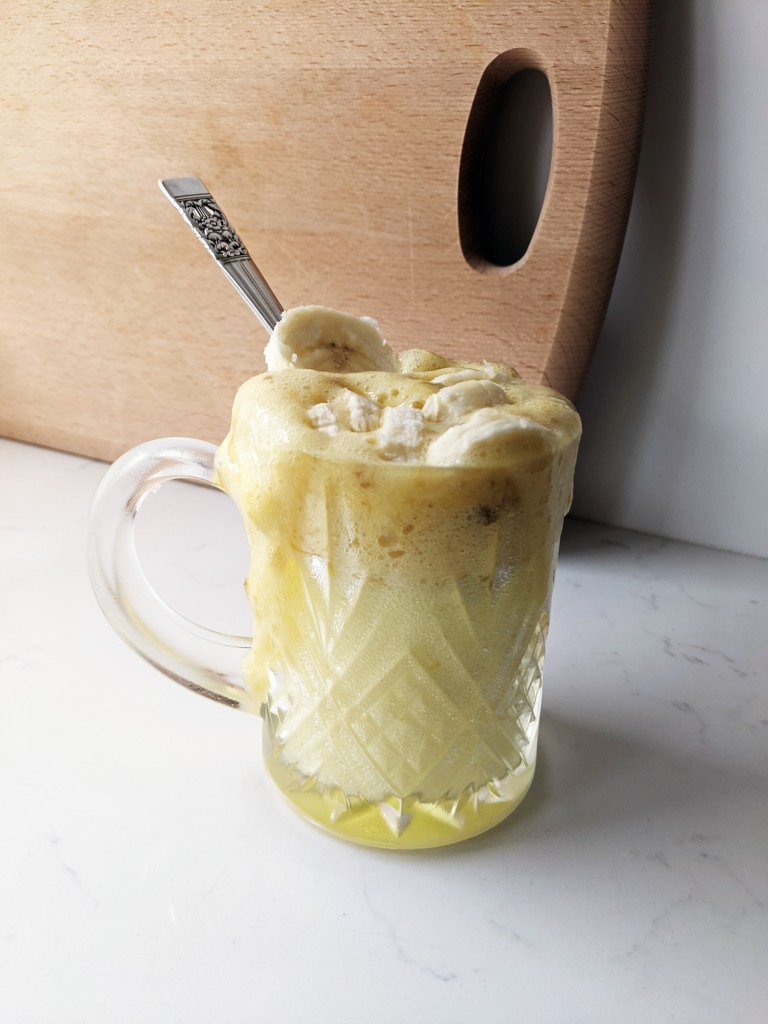
Comments: Gelatin is so versatile in both flavor and texture, but, until yesterday, I had done little to explore the latter. Shame on me, really, as I’m very pleased with this first foray. The fairly straightforward whipping process creates a voluminous foam that retains the structural qualities of gelatin. It’s mold-able! It jiggles! It sways! It’s also sophisticated, delicate, and very good.

“Whip it, whip it good.”

Devo

The accompanying banana sauce was equally easy to prepare and had a fresh banana taste that you can’t often find in many products due to artificial flavoring. It’s worth making. For those who dislike bananas, the original recipe and excerpt below also suggest the addition of a custard. I did not attempt this, but if you like to make your custard without dairy, I would suggest using this recipe or something similar. I also think that a raspberry coulis would be both delicious and attractive!

A second note about presentation: my pudding did not reach the “snow white” color promised in the name, but I’m thinking that this has more to do with the amount food coloring in today’s Jell-O products. Not to worry, the yellow hue is still attractive.

How to Whip Jell-O Gelatin
from Joy of Jell-O Gelatin Dessert, c. 1965

One of the easiest things you can do to change the texture and appearance of Jell-O Gelatin—just whip it until thick and fluffy.

Prepare Jell-O Gelatin (any fruit flavor) as directed on package and chill until very thick. Then beat with rotary beater or electric mixture until mixture is fluffy and thick—about double in volume results in the best eating quality and flavor.

To shorten the chilling and beating times, chill the gelatin until slightly thickened. Then place the bowl of gelatin in another bowl of ice and water before starting to beat.

Pour whipped gelatin into molds or shallow pan, or add cubes of Jell-O Gelatin or fruit and pour into molds. Chill until firm. Unmold, cut in squares, or spoon into serving dishes; serve with fruit or a custard sauce, if desired. A 3-oz package makes about 4 cups, or 4 or 5 servings; a 6-oz package makes about 8 cups, or 8 to 10 servings.

Snows: Prepare whipped Jell-O Gelatin, adding unbeaten egg whites to the thickened gelatin before starting to beat. Use 1 or 2 egg whites for a 3-oz. package Jell-O Gelatin, or 2 or 3 egg whites for a 6-oz. package.

Coffee Spanish Cream

“It’s creamy. Do you have more of the other coffee jelly?

Dedicated Taster

Coffee Spanish Cream                 
1 envelope unflavored gelatin
1 ½ cups strong coffee
2/3 cup sugar
2/3 cup dairy-free milk alternative
2 egg yolks
Pinch salt
1 teaspoon vanilla
Non-dairy whipped cream alternative

1. Soak the gelatin in one-half cup cold coffee for five minutes.
2. Using a double boiler, place on stove one cup coffee, two-thirds cup milk, egg yolks, and cook until thickened, stirring constantly.
3. Remove mixture from heat and add sugar, dissolved gelatin, vanilla and salt.
4. Divide into serving dishes and chill until set.
7. Serve with whipped cream.

Original Recipe                    
Charles B. Knox Co.’s Dainty Desserts for Dainty People, c. 1920

½ envelope Knox Sparkling Gelatine.
1 ½ cups strong coffee.
2/3 cup sugar.
2/3 cup milk.
2 eggs.
Pinch salt.
1 teaspoonful vanilla.

Soak the gelatine in one-half cup cold coffee five minutes. Place on stove one cup coffee, two-thirds cup milk and when boiling add yolks of eggs well beaten. Cook three minutes, then add sugar and dissolved gelatine and salt. When cool, stir in whites of eggs beaten to a stiff froth. Flavor with vanilla. Mold and serve with whipped cream.

Minute Café Parfait
Minute Tapioca Company’s Minute Gelatine Cook Book, 1926  
1 envelope Minute Gelatine
1 cup sugar
1 cup hot coffee
Yolks of 2 eggs (well-beaten)
1 pint whipped cream

Mix together Minute Gelatine and sugar and dissolve in hot coffee made the proper strength for drinking. Stir in the well-beaten yolks and cook in a double-broiler till it begins to thicken. Remove from fire and cool in ice-box. Just before serving stir in sweetened whipped cream into the cold custard.

Comments: Oofta. This is one of those recipes written by either a misguided novice or an accomplished cook for other accomplished cooks. My updated recipe is a simplified version that captures the texture, consistency, and flavor of the original.

There are several omissions in the original recipe that are critical to its success. You can’t add egg yolks to a boiling liquid – the result will always be a type of egg drop soup. Similarly, beaten egg whites will not combine easily with a liquid – they will float. Equally frustrating to the amateur cook are the methods used to successfully incorporate manipulated forms of a raw egg. To make this recipe more user-friendly, I chose to replace the whites with whipped cream and simplify the tempering process. (You can read more about tempering here.) These changes were inspired by the Minute Tapioca Company’s recipe above and by similar recipes in other cookbooks.

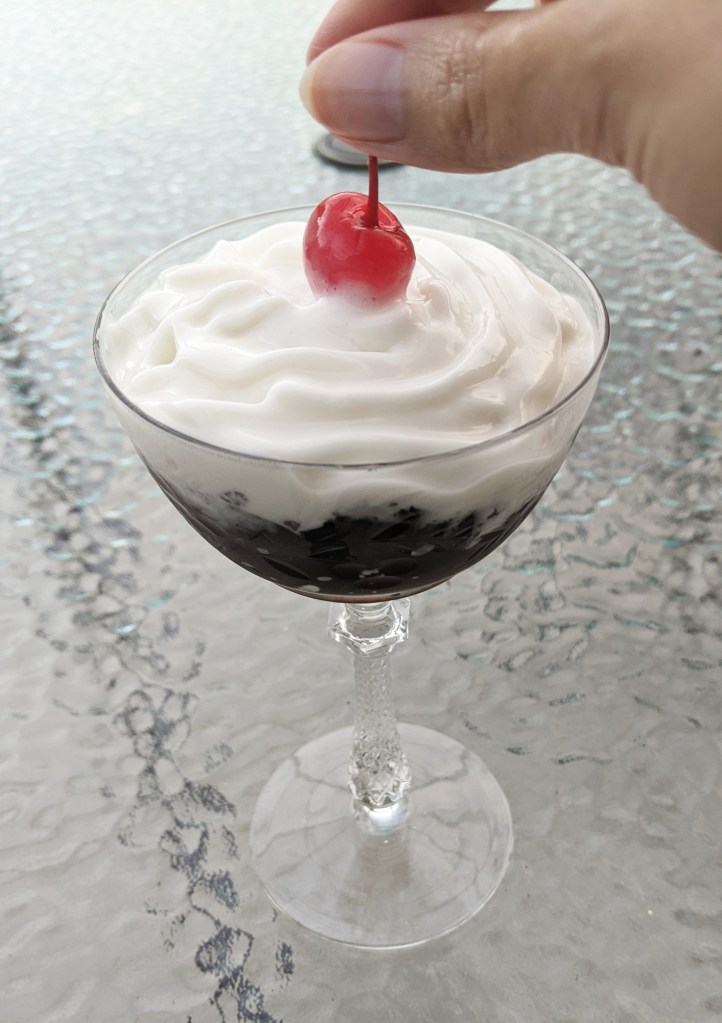
Overall, my tasters enjoyed this recipe, but they didn’t love it enough for me to make it again. They preferred instead the original coffee jelly, perhaps because of our Durgin-Park memories. Our frequent addition of ice cream to the original coffee jelly may also have been a deciding factor!

As for presentation, this is a lovely dessert that looks like a parfait. You may want to add a cherry just for fun! Where are my pictures, you ask? I didn’t take any! I forgot. It’s been a week.

Coffee Dessert

Coffee Dessert
1 envelope unflavored gelatin
½ cup cold water
1 ¼ cups hot strong coffee
½ cup sugar
Dairy-free coffee ice cream
Non-dairy whipped cream

1. Soak the gelatin in the cold water five minutes.
2. Add the hot coffee and sugar and stir until dissolved.
3. Pour into individual serving dishes and chill.
4. Serve with ice cream and whipped cream.

Original Recipe
Plymouth Rock Plain Gelatine Recipes, c. 1920

1 Envelope Plymouth Rock Plain Gelatine
½ cup cold water
1 ¼ cups hot strong coffee
½ cup sugar

Soak the gelatine in the cold water five minutes. Add the hot coffee and sugar and stir until dissolved. Chill until hard and serve with whipped cream.

Comments: This dessert tastes both excellent and familiar. Serve it like Boston’s beloved former landmark Durgin-Park with coffee ice cream or double the fun with ice cream and whipped cream.

Let’s Talk about Wine Jelly

Before I shared recipes for Hood’s Wine Jellies Nos. 1 and 2, I searched our recipe index and reviewed the ten wine jellies in our cookbook collection.

That’s right, we have an index. And yes, it is huge, and it is magnificent! Friends exclaim in wonder when they see it, and a mere mention of it shakes our enemies to their sad, gelatin-free cores.

What I found during this search – recipes listed below – is that there are a few must-have ingredients in every excellent wine jelly, but that much of it is left to individual preferences. Like all recipes, really. The must haves are (ideally fresh) lemon juice, sugar, and wine. Optional ingredients include orange juice, spices, and, for a “fancy jelly,” a whole bunch of nuts and fruit.

The choice of wine keeps this recipe modern. In my circle, sherry is not a favorite, while port is drunk only on occasion. The assumption with this recipe is that you are using a bottle from your “cellar” – whether that be a shelf on a closet or something more. The joy of this recipe is that it is easy to make with ingredients that are likely on hand; a popular wine will create a modern taste.

The choice of wine also dictates the amount of sugar. As I mentioned in previous posts, feel free add sugar sparingly and taste liberally as you adjust and perfect the ratio. The sugar should be added last, after the wine and lemon juice, so that you are accounting for every aspect of the flavor profile.

This stunning, crowd-pleasing dessert is simple to make and easy to modify.
I can’t wait for others to try it!

One note of interest: I was curious to find that the recipes for wine jelly didn’t disappear during Prohibition! There are several possible reasons for this. Perhaps it speaks to the wealth of the audience, who may have had large amounts of liquor in storage when the law was passed, or hints of the elevated status of this type of this dessert due to the rarity of its main ingredient. I think that it most likely has to do with the state and cities in which the recipes were printed, as the law was never suitably enforced in, for example, New York City, and to my knowledge, the rest of New York State.

Wine Jelly
Kickapoo Indian Medicine Co.’s The Family Cook Book, c. 1890

One-third box of gelatine dissolved in one cup of cold water, add to it half a lemon sliced, one cup of boiling water, four tablespoons of sugar, and one cup of sherry or port wine; turn into mould and set aside to harden.

Gelatine (Lemon and Wine)
Sloan’s Handy Hints and Up-to-Date Cook Book, 1901

To a box of gelatine put 1 pint of cold water and 2 or 3 lemons cut fine. Let it soak two hours, then add 1 pound of sugar, then pour 1 quart of boiling water over the whole, and 1 pint of wine. Strain through a cloth, set on ice to stiffen.

Wine Jelly
Gold Medal Flour Cook Book, 1910

½ box gelatine
½ cold water
1 pint boiling water
1 cup wine
1 cup sugar
1 lemon

Soak the gelatine in cold water until soft. Add the boiling water, wine, sugar and lemon juice. Strain. Keep on ice until ready to serve.

Wine Dessert 
Plymouth Rock Plain Gelatine Recipes, c. 1920

1 Envelope Plymouth Rock Plain Gelatine
½ cup cold water
Juice ½ lemon
½ cup cold water
½ cup wine (sherry)
¾ cup sugar

In a pint measure soak the gelatine in the cold water five minutes. Then add the hot water and stir. When cool, add the wine, lemon juice and sugar. Fill molds and chill until hard.

Wine Jelly
Charles B. Knox Gelatine Co.’s Dainty Desserts for Dainty People, c. 1920

1 envelope Knox Sparkling Gelatine
½ cup cold water
2 cups boiling water
1 cup sugar
1 cup wine
Juice of two lemons

Proceed as in lemon jelly; add the wine and fruit juice when the dissolving sugar has cooled the liquid.

NOTE: A tablespoonful of Angostura Bitters added to the above jellies imparts a fine flavor.

Fruit Molded in Jelly
Charles B. Knox Gelatine Co.’s Dainty Desserts for Dainty People, c. 1920

Make a lemon, orange, or wine jelly with Knox Sparkling Gelatine according to previous direction. Set a plain mold in broken ice and water, and dip thin slices of fruit or almonds and pistachios in liquid jelly and arrange on the bottom and sides of the mold according to some design. Carefully add a spoonful or two of jelly to hold the nuts or fruit in place, then, alternatively, fruit and jelly to fill the mold. Sliced bananas, white grapes skinned and seeded, candied cherries, figs cut in shreds, and orange sections from which the membrane has been removed, either singly or in combination, are good. Serve with whipped cream or thin custard.

Fancy Jelly
Charles B. Knox Gelatine Co.’s Dainty Desserts for Dainty People, c. 1920

Make a lemon or wine jelly; dissolve and color such portion of a package of Knox Sparkling Gelatine as is desired in a tablespoon of water and add to it one-half of the liquid jelly. Pour this into a mold, and when set pour in the untinted part of the jelly, or mold separate in separate molds and cut into cubes to use as garnish in carrying out a pink “color scheme.”

Wine Jelly
Joy of Cooking, 1946
8 Servings

Soak: 2 tablespoons gelatine*
In: ¼ cup cold water
Dissolve it in: ¾ boiling water
Stir in until dissolved: ½ cup or more sugar**
Cool these ingredients. Add:
1 ¾ cups orange juice
6 tablespoons lemon juice
1 cup well-flavored wine

If this mixture is not a good color add: a little red coloring
Chill the jelly until it is firm. Serve it with: Cream, whipped cream, or boiled custard.

*These proportions of water, fruit juice and wine may be varied. If the wine is not strong, use less water to dissolve the gelatine and increase the amount of wine accordingly. This makes a soft jelly of a very good consistency to serve in sherbet glasses or from a bowl. If a stiff jelly is desired for molds, increase the gelatine to 3 tablespoonfuls.
**It is difficult to give an accurate sugar measurement. One-half cupful is sufficient if both the oranges and the wine are sweet. Taste the combined ingredients and stir in additional sugar if it is needed.

Berries and Bubbles

Consider this your fancy, party-ready congealed salad. The temperature of the prosecco and club soda are key. Keeping the liquids cold helps the salad congeal faster, before too many of the tiny bubbles disappear.

Southernliving.com

Berries and Bubbles
from Southernliving.com
Hands-on: 15 mins
Total: 3 hrs
Yield: Makes 8 to 12 servings

Ingredients
1 (1-oz.) package unflavored gelatin
3 cups chilled prosecco, divided
1 cup sugar
1/2 pt. fresh raspberries
1/2 pt. fresh blackberries
1 cup cold club soda

Directions
1. Sprinkle gelatin over 1 cup cold prosecco in a large bowl. Let stand 3 minutes.
2. Stir together sugar and remaining 2 cups prosecco in a medium saucepan. Bring to a boil over high heat, stirring constantly; boil, stirring constantly, until sugar dissolves. Add hot prosecco to gelatin mixture, and stir until gelatin dissolves. Chill until consistency of unbeaten egg whites (about 40 minutes).
3. Place raspberries and blackberries in a 6-cup gelatin mold. Stir cold club soda into chilled gelatin mixture until blended. Pour over fruit in mold. Chill until set (about 2 hours).
4. If necessary, run a small knife around edge of mold to break seal. Dip bottom of mold in warm tap water for about 15 seconds. Unmold onto a serving plate.

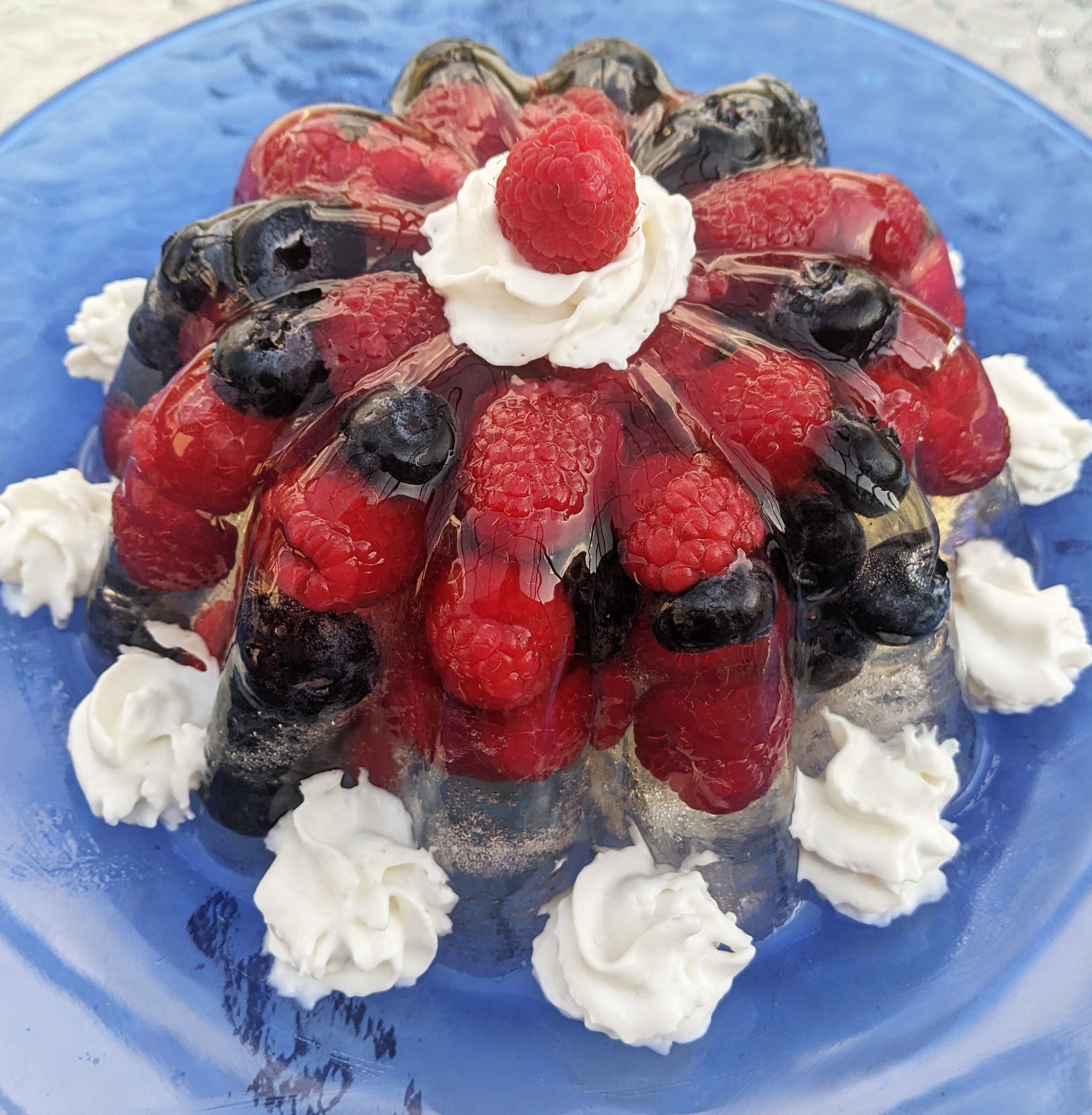
Comments: Woohoo! Happy New Year! We chose to celebrate with this divine prosecco and berry gelatin dessert that gently fizzles in your mouth, while the accompanying fresh fruit and whipped cream add color, sweetness, and texture.

I don’t recommend altering this recipe – with one exception. The amount of prosecco in this jelly creates a strong wine taste, and, if you are serving someone who prefers sweet wine or dislikes the taste of alcohol, they may prefer the ratio of sugar to wine in this previous recipe. Know thy audience, right?

Happy 2022, All! Wishing everyone a joyful and peaceful year in spite of the uncertainty of the times.

Wine Jelly, No. 2

Wine Jelly, No. 2
One package + one teaspoon unsweetened gelatin
Cold water
1 pint hot water
½ – 1 cup sugar
½ cup wine
1 tablespoon or more lemon juice
Non-dairy whipped cream and fruit for garnish

1. Dissolve gelatin in a little cold water and add pint of hot water.
2. Let gelatin and water come to a boil and add wine, lemon juice.
3. Add sugar to taste and refrigerate until set.
4. Unmold and garnish with whipped cream and fruit.

Original Recipe
from Hood’s Cook Book, c. 1880

To one paper Cox’s Gelatine add one pint of cold water, the juice and grated rind of two lemons, one pounded nutmeg and two or three sticks of cinnamon. Allow this to stand one hour, then add one quart of boiling water, one pint of wine—Sherry is much the best—one wineglass of brandy, two pounds of white sugar. When all is dissolved strain through a flannel jelly bag.

Wine Jelly, No. 2
from Hood’s Cook Book, c. 1880

One-third of a package of gelatine dissolved in a little cold water; to this add a pint of hot water and let it come to a boil; then put in two cups of sugar, one half-cup of wine or boiled cider, and nearly one tablespoon or essence of lemon. Let cool till the next day.

Comments: Happy New Year’s Eve! We began our celebration last night with this festive and sophisticated dessert from the 1880s. It’s a light and fun end to a heavy winter meal.

After reviewing a number of wine jelly recipes, I decided to try this one for several reasons: it uses the least amount of wine, it is the simplest, and, most importantly, it is the oldest.

The lack of details made me curious about the type of wine, which I assumed should be a dry red based on the provided sugar to wine ratio. I was wrong! A search for confirmation through a comparison of similar recipes revealed no consistencies. In all the recipes I reviewed, the type of wine was either unspecified or a preference for sweet dessert wine like sherry or port was given. Based on this research, I chose to use the uncorked Moscato d’Asti in our refrigerator.

This dessert requires some tasting throughout the process. Be careful to add the sugar in small amounts, sampling as you go, and only after you add your wine and lemon juice. It is also worth considering the wine and water ratio that you would find most enjoyable, as you may want adjust it prior to addition of the sugar and juice. I used a 1/2 cup of sugar, 1/2 cup of sweet wine, and a tablespoon of lemon juice with some success. My tasters and I found this combination created a very delicate taste, with sugar as the predominate flavor, the wine an aftertaste, and the lemon juice indiscernible.

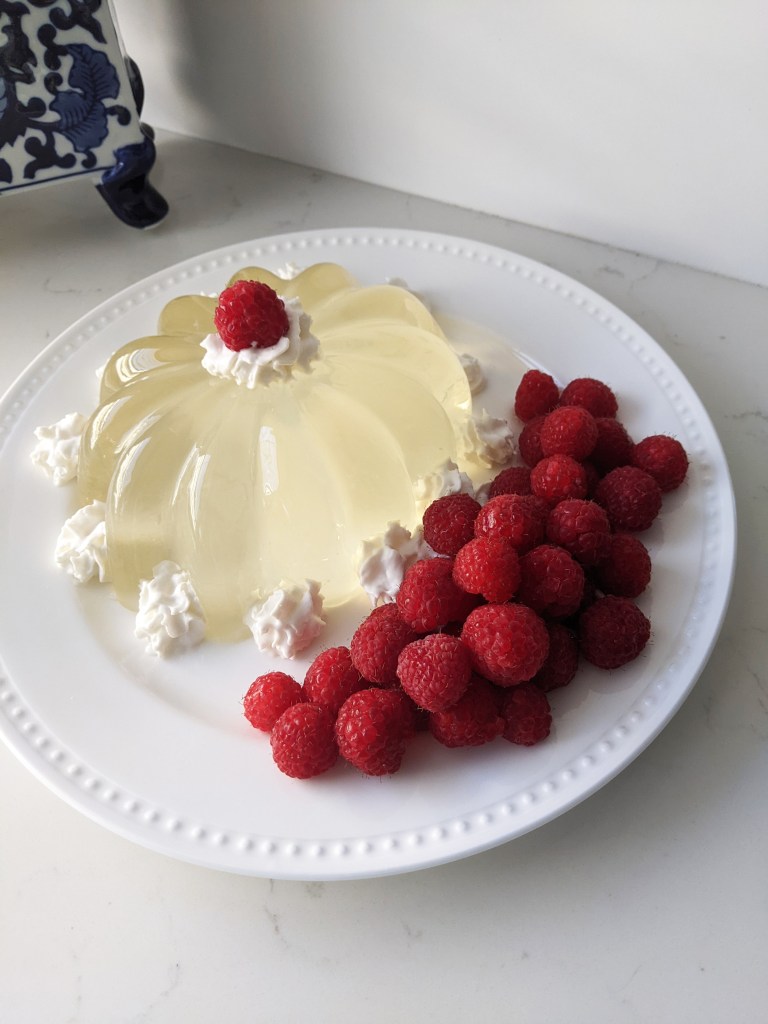
When garnishing this beauty, you may want to consider including a substantial amount of berries and whipped cream. I had a “happy accident” while plating the gelatin, which landed left of the plate’s center. To compensate, I piled much of the fruit to one side, adding more raspberries than I had originally thought to include. This addition was popular with my tasters, who enjoyed the raspberries both with and without the gelatin.

Spiced Peach Salad

Spiced Peach Salad
1 envelope unflavored gelatin
1 tablespoon sugar
¼ teaspoon salt
1 (1 lb.) can sliced peaches, reserving juice
Water
6 whole cloves
1 stick cinnamon
1/8 cup lemon juice

1. Mix gelatin, sugar, and salt thoroughly in a saucepan.
2. Drain peaches. Set peach slivers aside. Add water to syrup to make 1 ¾ + 1/8 cups liquid. Add to gelatin with cloves and cinnamon. Place over heat and simmer about 10 minutes. Strain.
3. Remove from heat and stir in vinegar. Chill to unbeaten egg white consistency.
4. Fold in peaches. Turn into a 2-cup mold or individual molds and chill until firm.
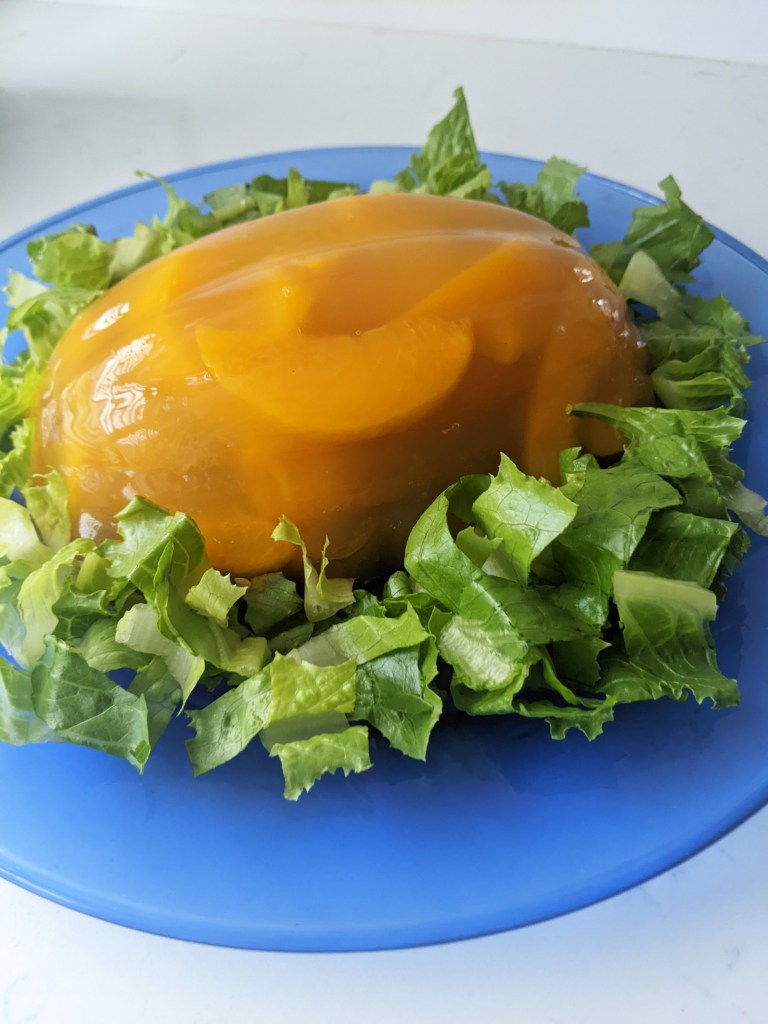
5. Unmold on a serving plate and garnish with salad greens.

Spiced Peach Salad
from Knox On-Camera Recipes: A Completely New Guide to Gel-Cookery, 1963
Simple Gel
4 Servings
98 Calories per serving

1 envelope Knox Unflavored Gelatine
1 tablespoon sugar
¼ teaspoon salt
1 (1 lb.) can sliced peaches
6 whole cloves
1 stick cinnamon
¼ cup vinegar

1. Mix gelatine, sugar, and salt thoroughly in a saucepan.
2. Drain peaches. Set peach slivers aside. Add water to syrup to make 1 ¾ cups liquid. Add to gelatine with cloves and cinnamon. Place over heat and simmer about 10 minutes. Strain.
3. Remove from heat and stir in vinegar. Chill to unbeaten egg white consistency.
4. Fold in peaches. Turn into a 2-cup mold or individual molds and chill until firm.
5. Unmold on a serving plate and garnish with salad greens.

Comments: While I appreciate the fragrant spices in this salad, which are always welcome during for the fall and winter season, I can’t recommend it without providing some additional thoughts.

As with previous recipes, I modified the salad by reducing the amount of vinegar and then replacing it with lemon juice. I have an ongoing dialogue – both internal and with tasters – about the conspicuous amounts of vinegar in many of the recipes throughout this cookbook, as it appears that some are enhanced by a pickled taste, but they seem to be few and far between. In this recipe, the reduced amount of lemon juice is tolerable, but I believe that it could also be removed without injury to the final result.

Regarding the method: Because I was skeptical that 10 minutes of simmering would be sufficient to impart the flavors of the spices, I left the pot on the stove for an additional five minutes. Don’t do this! The gelatin will be flavorful without this additional time., and, if you leave the pot on the stove too long, the spices may start to overwhelm the fruit flavor.

As for presentation, the color of this salad is beautiful! Be sure to use canned peaches in juice, not heavy syrup, and, if food textures can difficult for your guests or family members, I would recommend that the peach slices are halved before their addition to the gelatin mixture. It might also be pleasant to remove the peach slices entirely or serve them as a garnish.

If you make this salad your own by modifying it to your liking, I think you will enjoy it very much.

Cucumber Jelly

“Are you trying to kill me? This is terrible!”

A Trusted Taster

Cucumber Jelly
1 envelope unflavored gelatin
½ cup cold water
2 ½ cups chicken stock
Sprig of parsley
¼ cup grated onion
2 cups cucumber, peeled and grated
Green and red food coloring
Mayonnaise

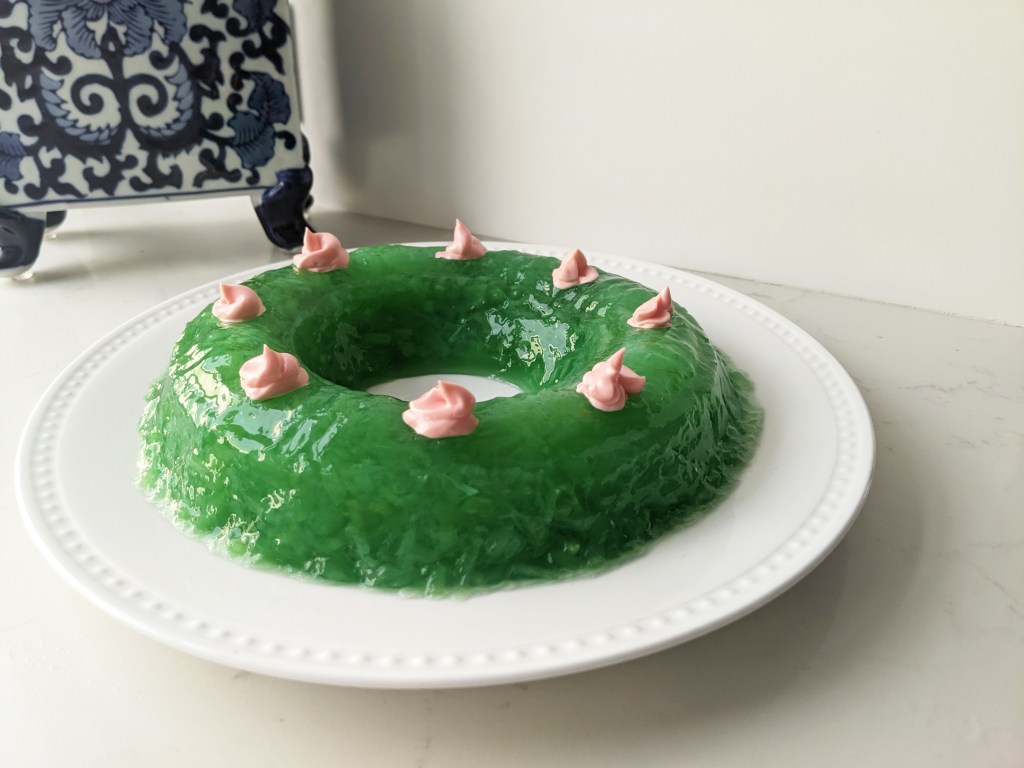
Add the onion, parsley and cucumber to the chicken stock and let stand two hours. Soak gelatin in the cold water five minutes. Heat the chicken stock and ingredients to boiling point and add the softened gelatin. Color with approximately 1.5 drops of green food coloring. Let stand a few minutes and pour in mold to set. Serve with mayonnaise dressing which has been colored pink with the red food coloring or beet juice.

Original Recipe
Charles B. Knox Gelatine Co.’s Dainty Desserts for Dainty People, c. 1920

1 envelope Knox Sparkling Gelatine.
½ cup cold water.
2 ½ cups chicken stock.
Sprig of parsley.
½ small onion grated.
3 cucumbers pared and grated.

Add the onion, parsley and cucumbers to the chicken stock and let stand two hours. Soak gelatine in the cold water five minutes. Heat the chicken stock and ingredients to boiling point and add the softened gelatine. Color with green coloring. Let stand a few minutes and pour in mold to set. Serve with mayonnaise dressing which has been colored with a pink color tablet or beet juice.

Comments: If you “came here for the comments,” you have the right idea! This colorful, savory side in the shape of a Christmas wreath went right from the test kitchen into the garbage disposal.

While I thought that this salad was only mildly offensive, my tasters had more dramatic reactions. Dinnertime was thrown into chaos as they questioned whether I loved them and considered reporting me for abuse. Some refused to swallow the salad, while others threatened to never taste anything else I made again. Their objections and complaints continued for some time as we laughed our way through the unpleasant experience.

So, why the fuss? The predominant flavors of this salad are chicken stock and onion, which, by themselves, are not completely objectionable, but the addition of the softened cucumber creates a texture that is foreign to the modern palate. There’s also the element of an unwanted surprise. For those more familiar with sweet, brightly-colored gelatin deserts, the addition of food coloring to both the gelatin and mayonnaise might be considered deceptive. The savory taste is unexpected and therefore undesired.

Yet, this salad has so much potential! For food historians, it provides some insight into what might have been served for dinner in the 1920s, but it leaves modern cooks with several unanswered questions: What inspired the use of green and pink dye? Why combine chicken stock and cucumber? Was this a popular salad? I’m curious to know whether it ever appeared on restaurant menus!

The real question is how to make this salad appetizing. I can think of only one solution: remove the chicken stock, onion, parsley, and cucumber and replace it with lime juice and a bit of sugar, while substituting pink whipped cream for the colorful mayonnaise. Then the salad’s transformation from savory to sweet would be complete.

Verdict: I am always grateful for my tasting team, especially when their reactions and comments make me laugh, but I can’t suggest that you willingly abuse your family and friends. Make this if you like your salads weird and you prefer to eat alone.